
Betacam SP, color, mono, 7:29 min
Paradays (1989) unfolds like a cryptic transmission from an extraterrestrial intellect, probing the hidden architecture of reality within a world governed by the insistent mantra of submission, discipline, work, life, and future. The seven-minute experimental collage blends Super 8, 16mm film, and early 3D computer animation into a conceptual atmosphere of civilizational transition.
The short film operates at the intersection of consciousness, technology, and observation. By juxtaposing imagery of early computing with parapsychology’s classic tests of extrasensory perception, the work establishes a tension between rational code and intuitive, human supra-rational potential. At the center of this tension are five abstract symbols, the Zener cards. These geometric forms function as a bridge between human cognition and machine processing, inviting viewers to confront an unfolding central hypothesis: that collective and connective futures emerge through symbolic systems shaped by both technological and extrasensory forms of corrective intelligence.
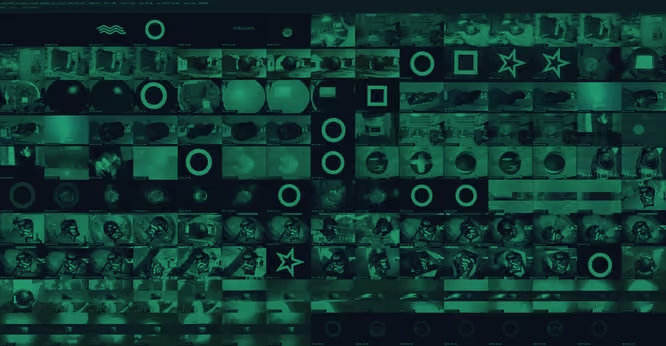
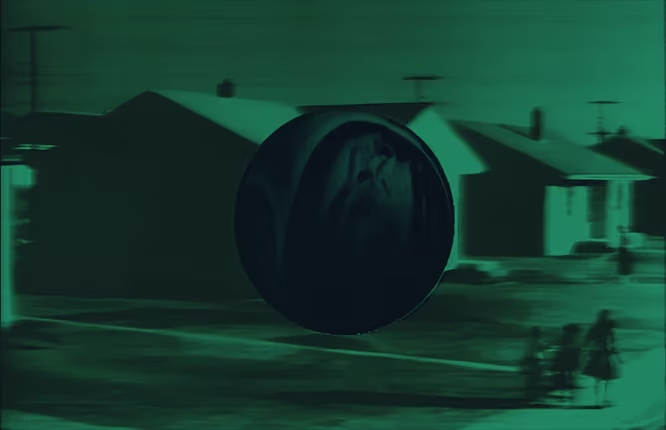
This hypothesis materializes through a dark spherical anomaly: the nuclear pan ovum, the seed of human metamorphosis. As the film progresses, the sphere gives way to a female torso: a hovering, enigmatic body. This torso embodies the civilizational threshold, the latent technological future quietly overwriting and reprogramming human creative potential and responsibility. Children appear as silent witnesses, observing both the transformation and the newly coded fabric of existence.
To navigate this fragile threshold, the film closes with an excerpt from Percy Bysshe Shelley’s essay On Life. Shelley’s words resonate across the transformation, evoking the impermanence of empires, the collapse of dynasties, and the cyclical recurrence of artificial political and technological systems, juxtaposing human ruin against the evolving, uncanny grandeur of life itself.
Paradays draws our senses into the architecture of change, leaving the viewer with Shelley’s encompassing revelation: life is “that which includes all.”
CREDITS
with
- Achim Wollscheid
- Doris Raabe
Technical & Creative Team
- Camera: Anna Saup, Michael Saup
- Music: Maria Koval, Michael Saup
- Mirage Effects: Ralf Drechsler (Bibo Tv, Das Werk, Frankfurt)
- Hardware: Bibo Tv (Bad Homburg)
Vocal & Text Contributions
- Voices: J.G. Bennett, Zener, David Larcher, Eugenia Fulkerson
- Text Source: P.B. Shelley
What are changes of empires, the wreck of dynasties, with the opinions which supported them; what is the birth and the extinction of religious and of political systems, to life? What are the revolutions of the globe which we inhabit, and the operations of the elements of which it is composed, compared with life? What is the universe of stars, and suns, of which this inhabited earth is one, and their motions, and their destiny, compared with life? Life, the great miracle, we admire not, because it is so miraculous.
It is well that we are thus shielded by the familiarity of what is at once so certain…
If any artist, I do not say had executed, but had merely conceived in his mind the system of the sun, and the stars, and had painted to us in words, the spectacle now afforded by the nightly cope of heaven, great would be our admiration.
…Truly we should have been astonished, and it would not have been a vain boast to have said of such a man, “Non merita nome di creatore, se non Iddio ed il Poeta.” [“None merits the name of creator except God and the Poet” by Torquato Tasso (1544 – 1595)] But now these things are looked on with little wonder, and to be conscious of them with intense delight is esteemed to be the distinguishing mark of a refined and extraordinary person. The multitude of men care not for them. It is thus with Life – that which includes all.
Percy Bysshe Shelley, On Life, 1819

GLATTES EIS EIN PARADEIS
Friedrich Nietzsche (1844 – 1900)
FUER DEN DER GUT ZU TANZEN WEISS. (sic)
https://zkm.de/de/werk/i-8843-paradays-0
RENCONTRES INTERNATIONALES ART CINEMA / ART VIDEO / ART ORDINATEUR
http://www.infermental.de/infermental_10_kategorie/infermental_10_02.htm