the transformation of
digital information to
analog matter
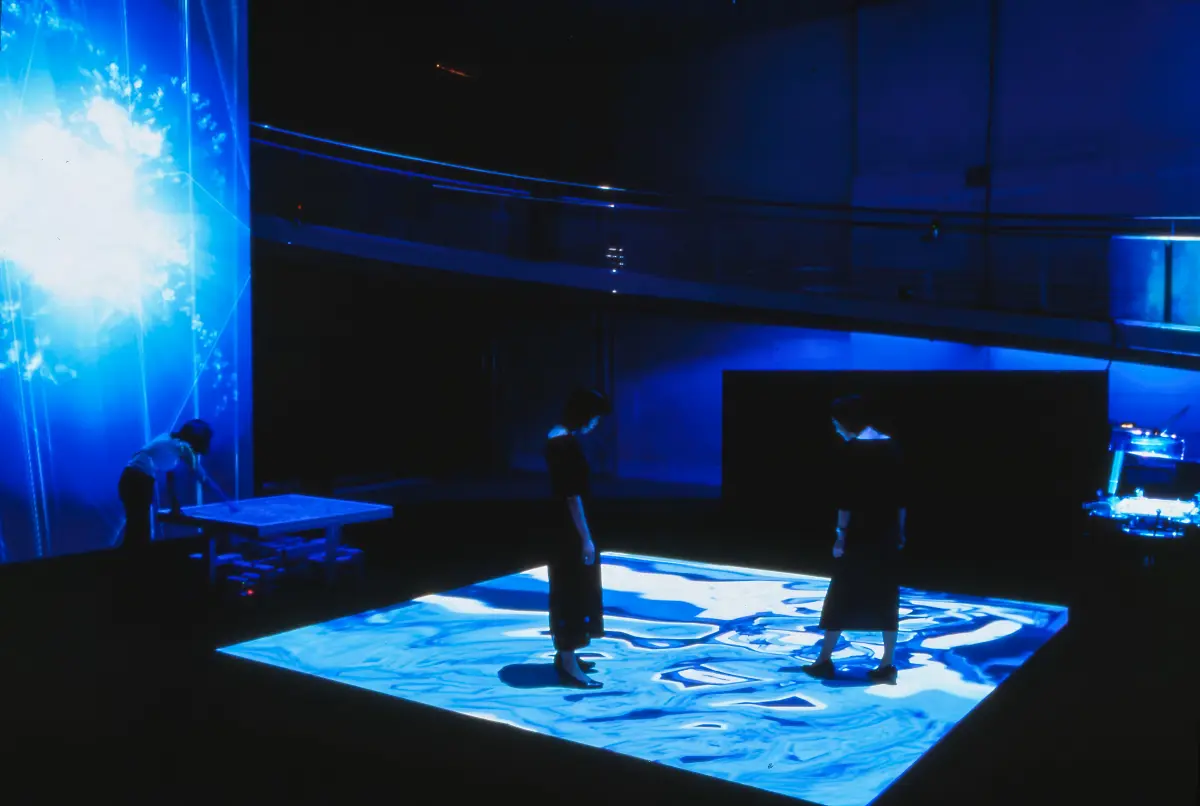
“R111 could be considered the pinnacle of
Yukiko Shikata, President of International Association of Art Critics Japan, 2024
media art at the turn of the millennium.”
Exploring Information as the
Ultimate State of Matter
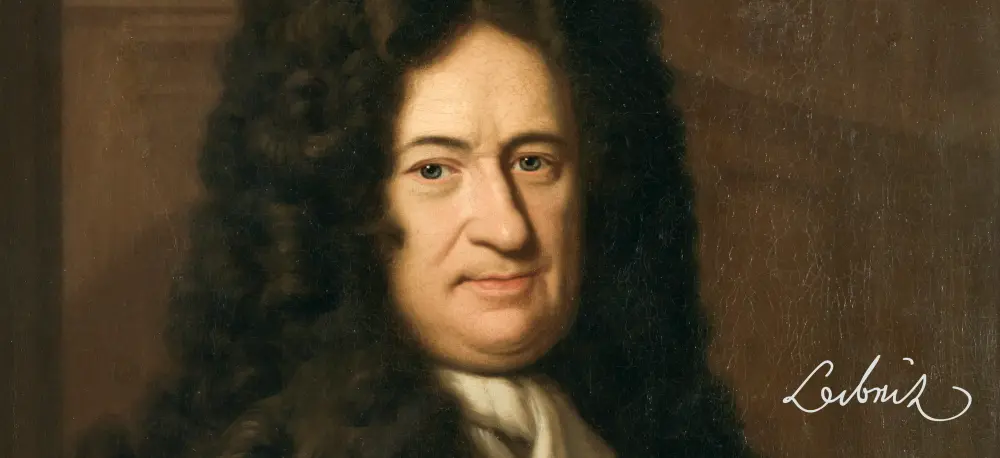
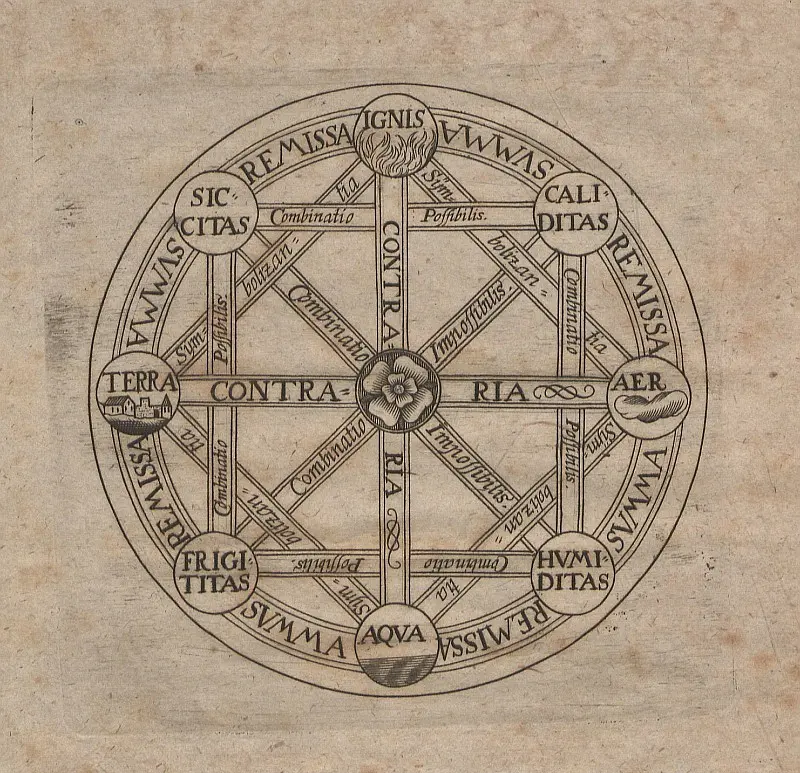
1666, at the age of 20, Gottfried Leibniz published the book “Dissertatio de Arte Combinatoria”. In this work he aimed to reduce all reasoning and discovery to a combination of basic elements such as numbers, letters, sounds and colors. He then discovered the binary system, the foundation of the digital universe.
1999, a lump of coal is burned every time a book is ordered online. It takes about 1 pound of coal to create, package, store and move 2 megabytes of data, which is the equivalent of downloading 2 minutes of music from the Internet. Futurists have been promising us information highways, not unit trains loaded with coal. Fiber-optic cables, not 600-kilovolt power lines. We’re going to get both.
“I virtualna je stvarnost tijelom (materijom) postala i prebivala meðu nama.”
“And virtual reality became embodied (materialized) and dwelled among us.”
Energy-potentials are cannibalized off the Internet and from the local movement of spectators in the physical space of R111. These energies are then transformed into various states of matter – both physical and virtual – and presented by the installation with the help of several modules. New media actual tendencies are virtualizing reality. R111 on the opposite materializes virtuality and its appetite for electrical power: choreographing particles of matter via energy as though they were pixels.
The aggregate state of Information Propagates Through the Medium of Energy
Visitors can participate and feel how energies are generated and transformed as different phenomena ranging from the virtual worlds to actual transformations of material, influencing each other. The energies of the material world that we maintain and realize as such are transferred into the information space and networks, on which today’s information society is centered. In this world where every existing fact can be information-processed, how can we sense the energies, such as intellectual, mental, and economic power, loaded into information?
Physical interfaces
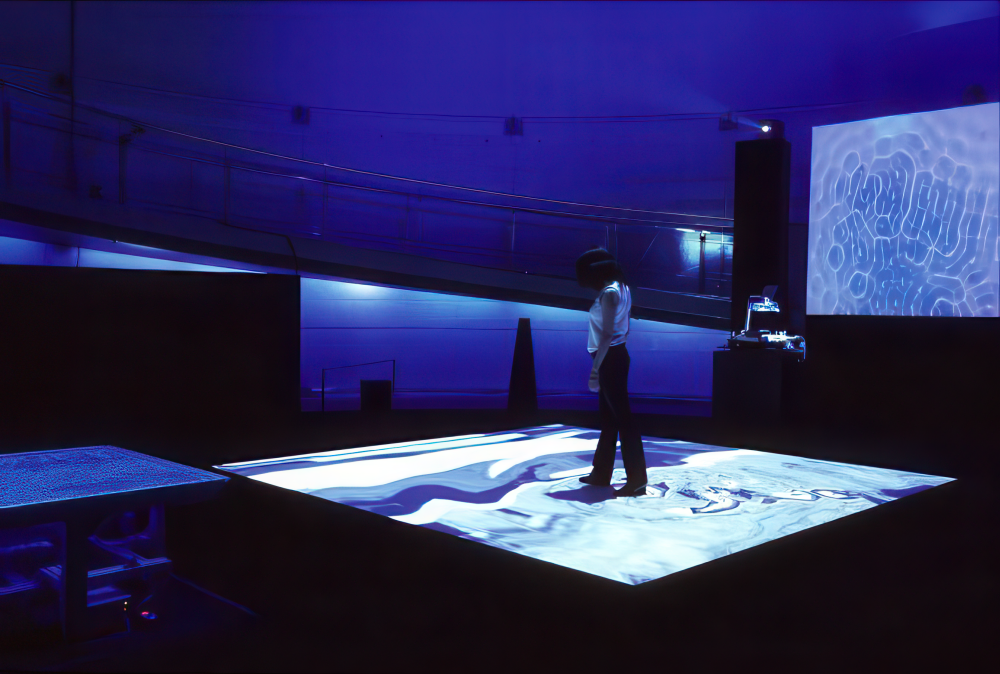
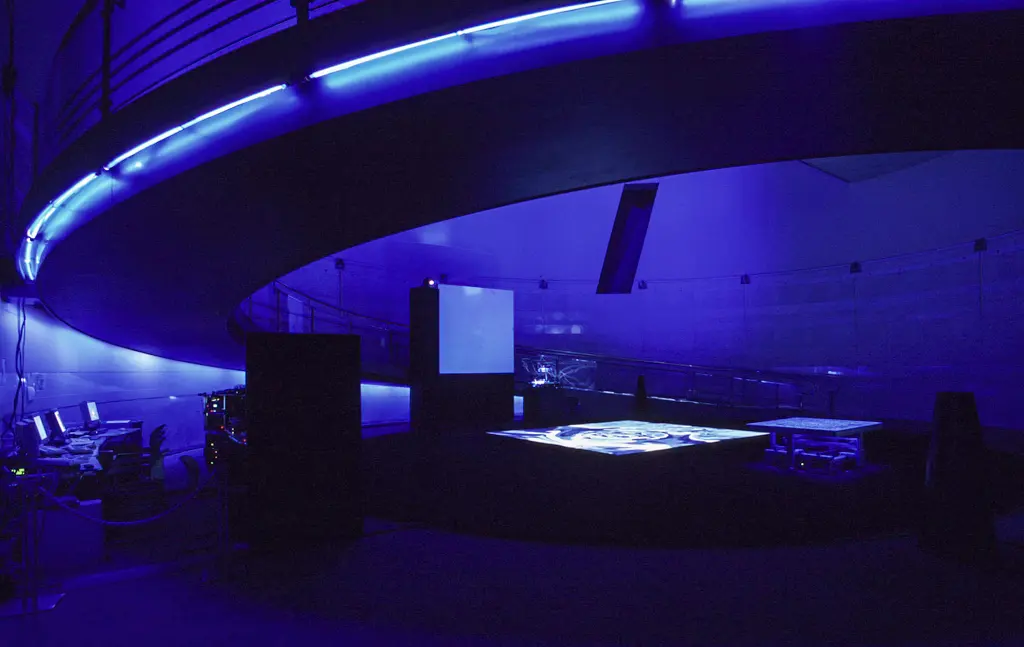
The sonic floor is the main local interface. Spectators can walk on top of the sonic floor. It consists of a subwoofer-matrix that transmits energy back to the spectator through vibrational forces induced by infrasonic sound waves. Any spectator moving on the sonic floor is tracked by a motion-tracking camera and therefore creates energy through movement for the system. As the spectator moves, they leave traces on a liquid surface projected onto the sonic floor.
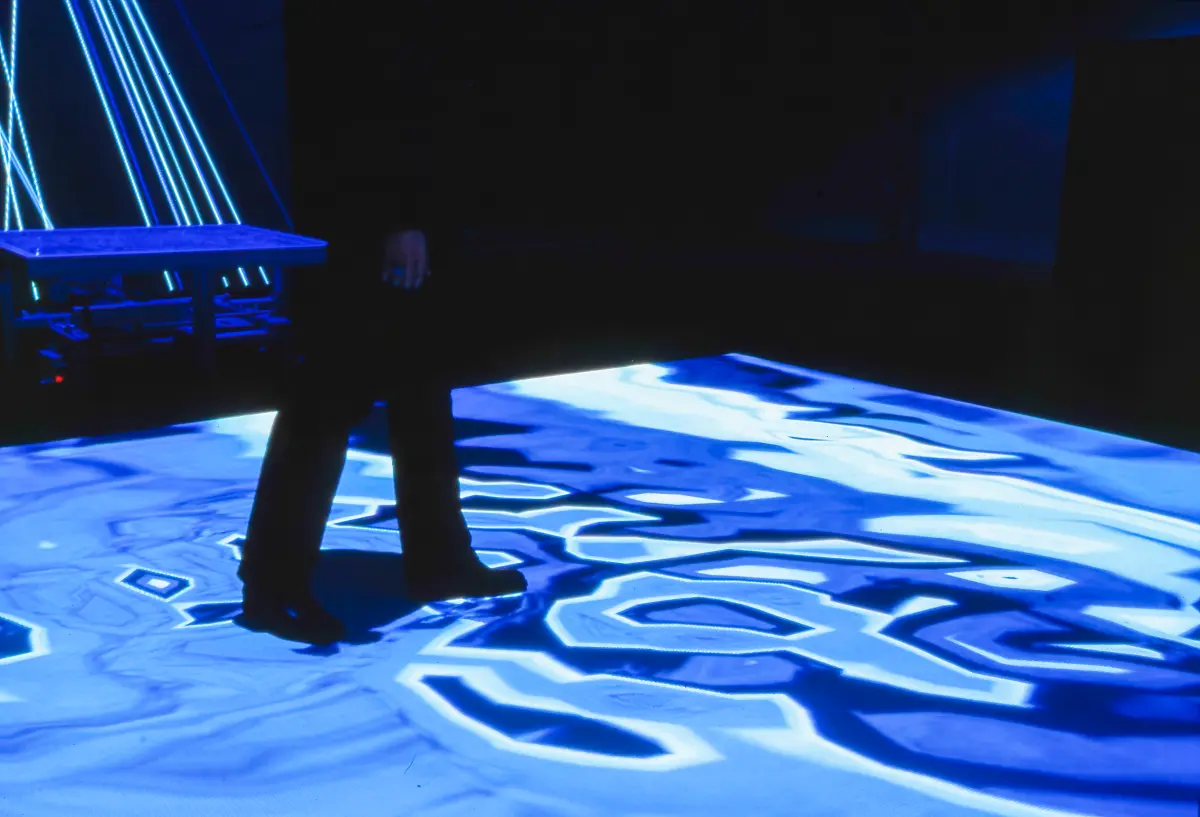
The liquid module consists of a platform that holds silicon oil. The platform itself is attached to audio speakers in a way that the liquid gets into motion triggered by sounds coming through the speakers. With this setup, it is possible to visualize the system’s energies with the help of liquid media. The liquid surface is then projected to the wall via an overhead unit.
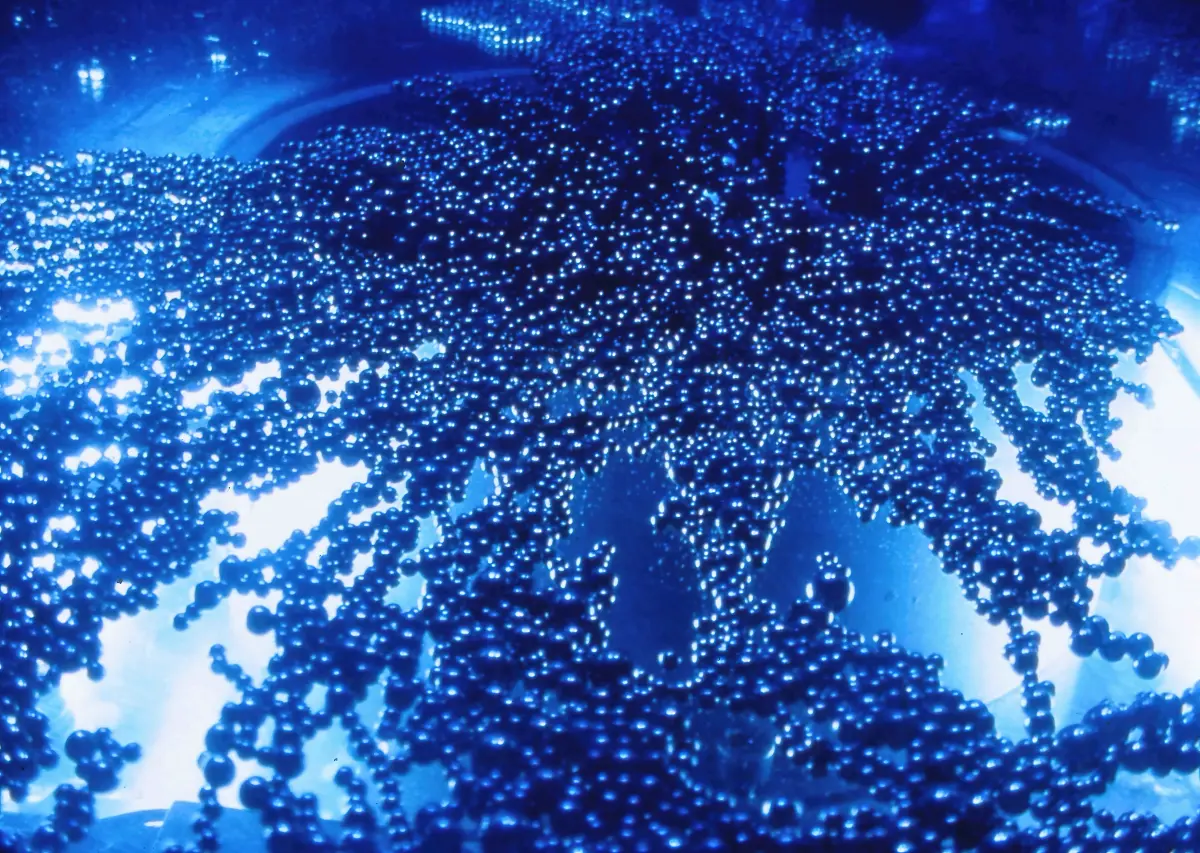
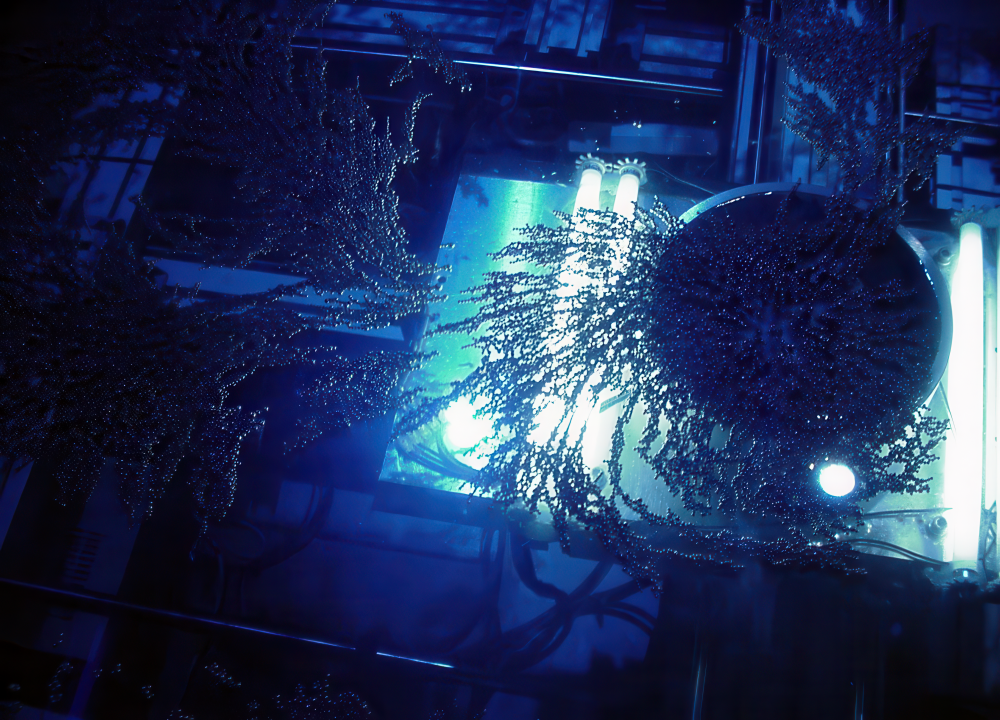
The magnetic module consists of a matrix of magnets under a metallic platform. On the platform is a collection of different-sized granular media such as steel balls. With this setup, we can create structures that visualize the system’s directional energy with the reorganization of granular media.
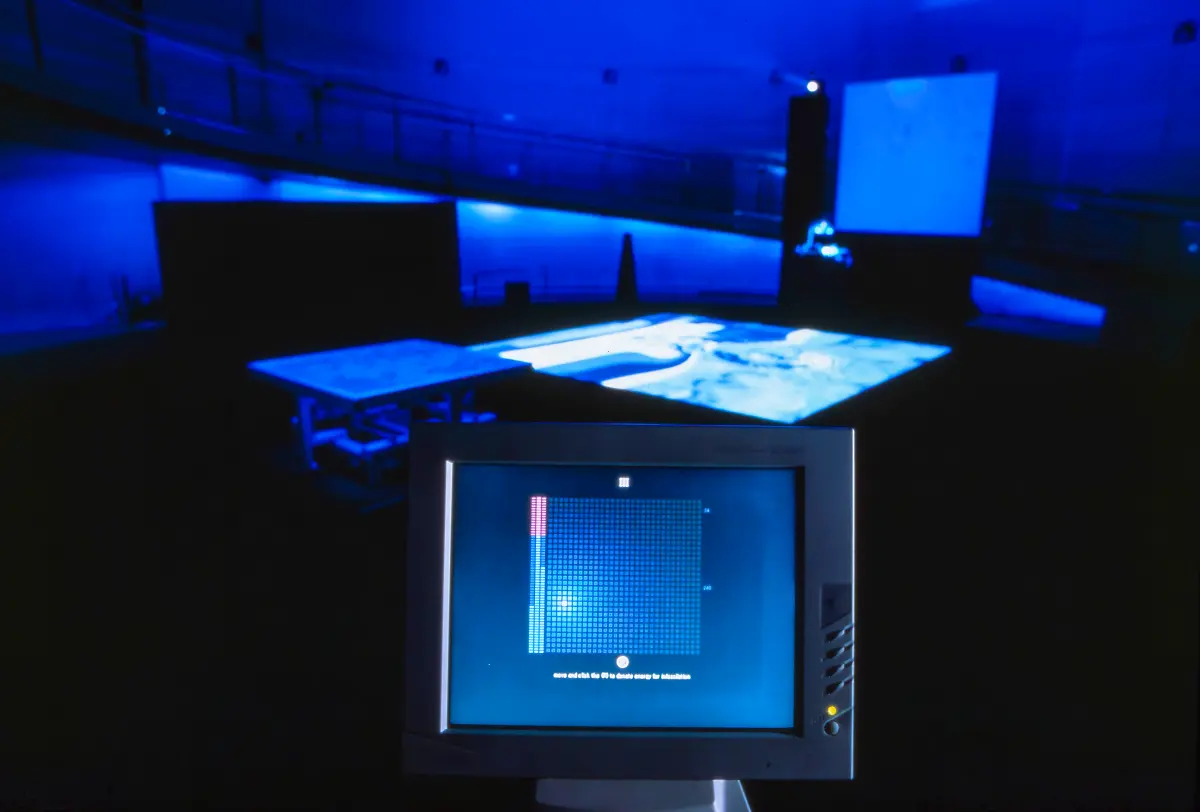
Network sensors: Data cannibalism: Web Cannibal, Virtual Motion Tracker & Semantic Vectors: R111 has an “eye” into the Internet: a Web Cannibal that creates IP numbers inside its IP factory and checks the content of websites found in such a manner. These results are then transformed and categorized into energy potentials based on semantic vector analysis. Via the Internet, spectators have the possibility to contribute more energy into R111 using the Virtual Motion Tracker interface on the R111 webpage. A touch screen showing the Virtual Motion Tracker is also situated in the exhibition space.
Spectators can actively contribute energy to R111 via the virtual motion tracker interface on the R111 webpage, further enhancing the system’s dynamics. Additionally, a touch-screen displaying the virtual motion tracker interface is available within the exhibition space for direct engagement.
the virtual world of R111 is a representation of the collective brain of the system. the incoming energy-potentials are visualized in an ever burning interactive fire in IP-coordinate space centered around 0.0.0.0, the absolute zero of the 4dimensional IP-universe.
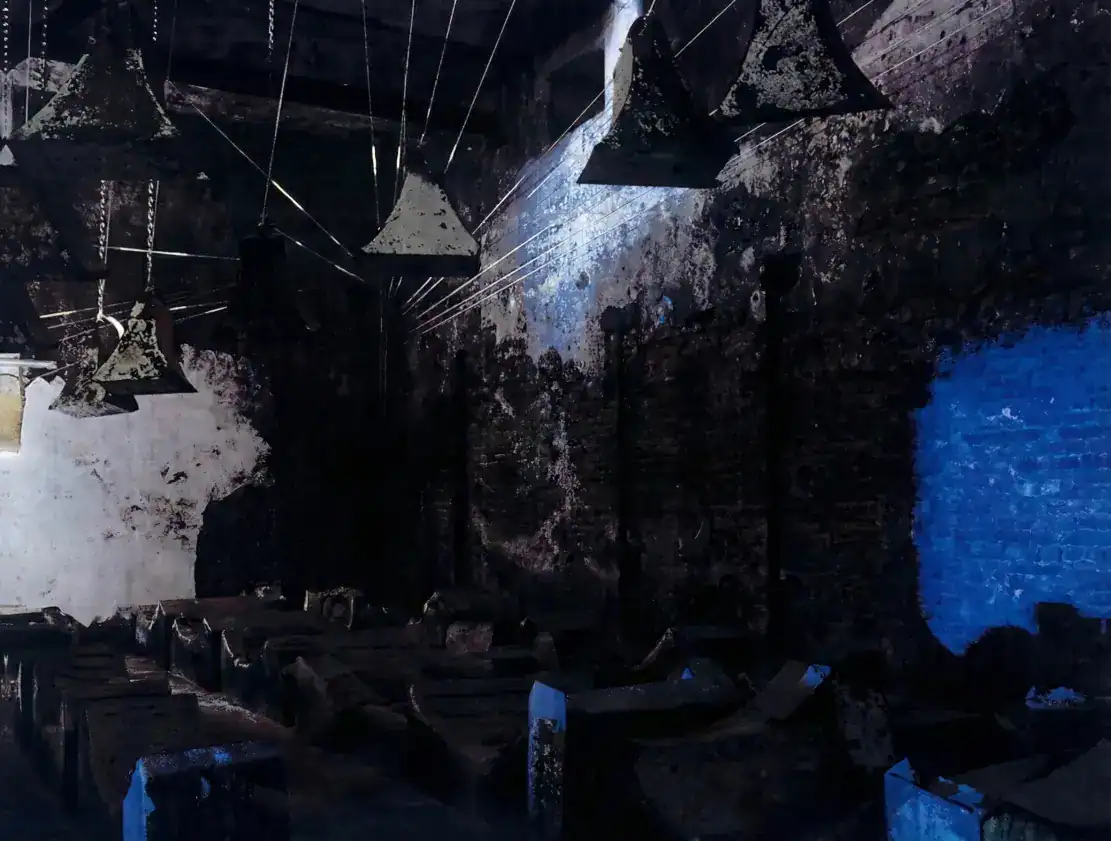
R111 module 1ST1 (1999) transforms industrial remnants into a lithic palindrome: a monolithic vessel encoding the year 1999 as a binary inscription. It reveals the weight behind digital illusion, confronting the viewer with the fragility of data and memory. Arranged like a modern Stonehenge, the sculpture anchors meaning against universal entropy, fusing Paleolithic endurance with millennial anxiety. Heavy, ritualized artifacts become a philosophical index of time, significance, and the precarious persistence of both stone and data.
exploring energy as
the ultimate medium
within the Fabric
of the Universe
アートラボ第5回プロスペクト展「R111 —仮想から物質へ」
アーティスト:ミヒャエル・サウプ+supreme particles(ドイツ)
会期:2001年6月1日 – 17日
会場:スパイラルガーデン(東京・南青山)
主催:キヤノン株式会社アートラボ
後援:ドイツ連邦共和国大使館、東京ドイツ文化センター
協力:株式会社ワコールアートセンター、ファストネット株式会社
協賛:日本SGI株式会社、キヤノン・スーパーコンピューティングS.I.株式会社。ハーマンインターナショナル株式会社
キュレーター:阿部一直+四方幸子(キヤノン・アートラボ)
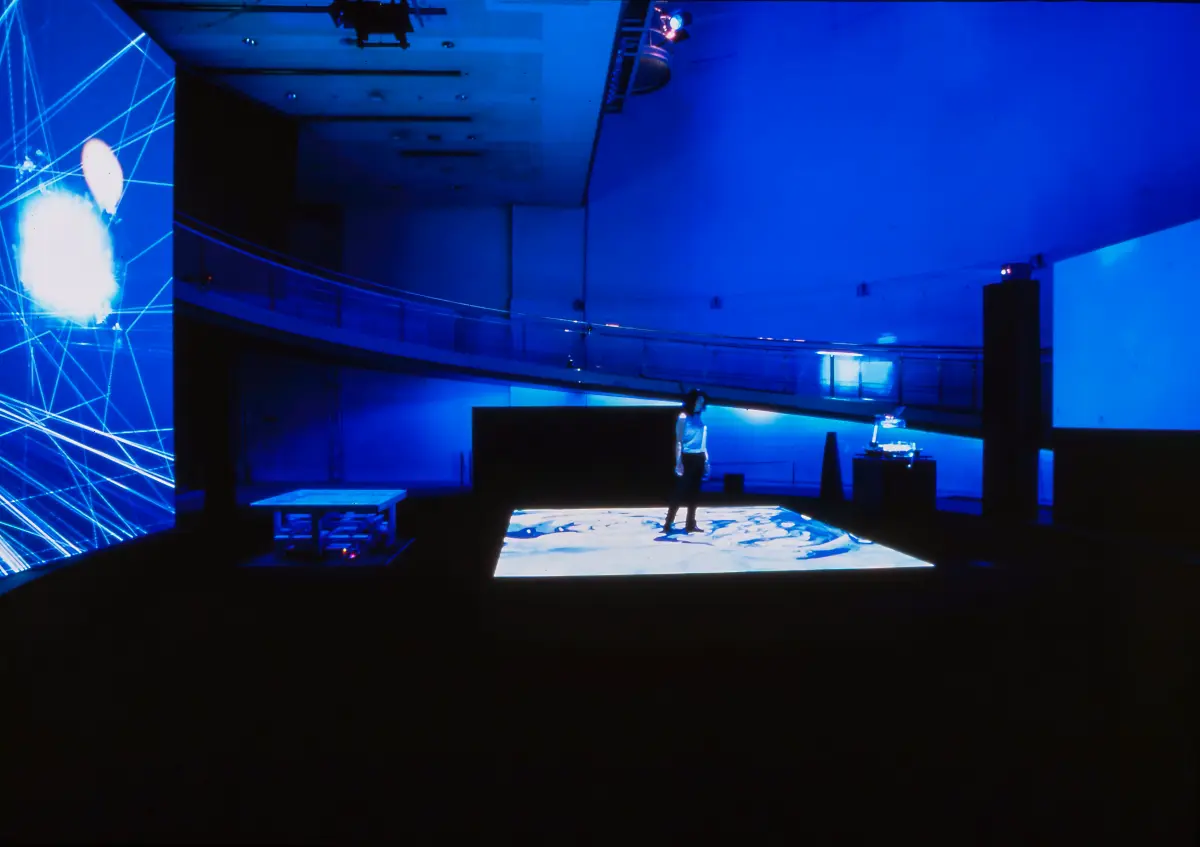
「R111」は、人の動き、磁気やシリコンオイルなどの物質の形態変化やそれらとリンクした仮想空間、そしてインターネットなどを領域を超えて稼働する潜在的エネルギーと見なし、エネルギーが様々な形で転移していく様を視覚・音響的に体験させる作品である。
フロア上で体験者が動くと、水のような波紋がサウンドを伴い揺らぎ、触覚的に迫ってくる。体験者の動き、会場の端末や遠隔からアクセスする参加者の操作、ウェブロボットが無作為に抽出したホームページの情報などがエネルギーとして分析され加えられていく。
正面のスクリーンでは、それらエネルギーが統合されたCGによる<仮想>世界が変動していく。情報空間上のエネルギーは、会場に設置された磁場を視覚化した装置(磁気モジュール)やシリコンオイルの波紋(リキッドモジュール)の形態変化へ伝搬していく。
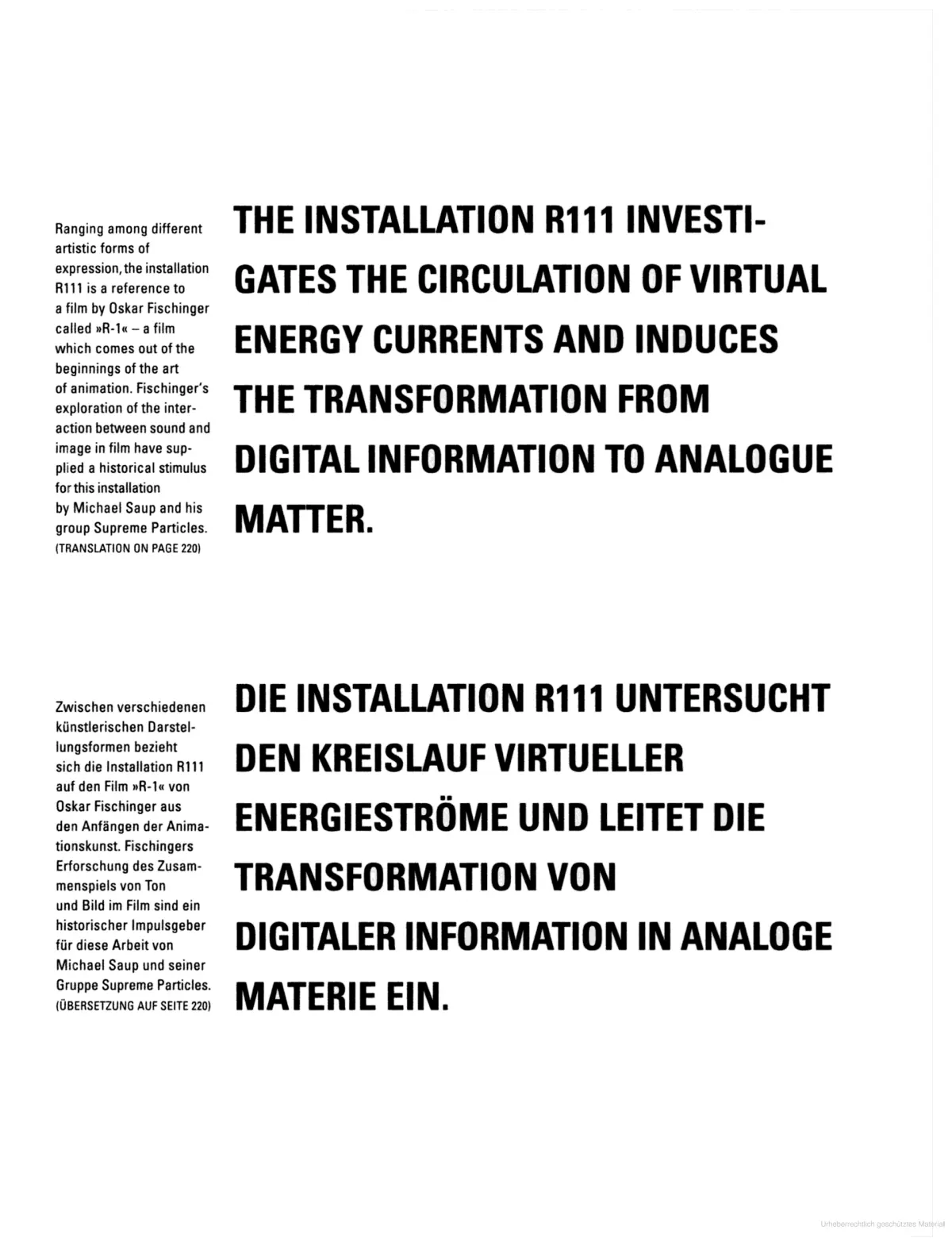
「R111」では、様々な要素:物質/テキスト、現実/仮想空間が複雑に絡み合い、エネルギーが循環し転移する様が表現される。本作はサウプと彼が率いるsupreme particleによる同名作品を、キヤノンとのコラボレーションによって特別なバージョンアップ版としたもの。「R111」は、1920年代のオスカー・フィッシンガーの実験映画「R1」と二進法で7を表す「111」による造語。サウプは、フィッシンガーと二進法の発案である哲学者ライプニッツを、あらゆる存在が情報化されていく現在のマルチメディア・ネットワークの発想の先駆と見なしている。
*本作のウェブロボットによるインターネット検索は、キヤノンが開発した知的情報検索技術を加えることで、新しいバージョンとした。またキヤノンのライブ映像発信システム「WebViewLivescope」を使い、体験者が作品形成に関わった様子をインターネットユーザーが遠隔的に体験することができた。

「キヤノン・アートラボ」は、科学と芸術の融合による新たなアート領域の創造をめざす実験的な場として1990-2001年に存在したキヤノン株式会社の文化支援プログラム。アーティストとソフトウェア・エンジニアとの約10カ月のコラボレーションによりメディアアートの新作を発表、それらの多くが国内外を巡回、アップグレードも継続的に行った。実施した展覧会は、合計17(企画展10、海外から作品を招聘するプロスペクト展5、オープン・コラボレーション展1、特別展1)。その他にカタログを始めとした出版、シンポジウムやトーク、機器サポート、資金サポートなどを行なった。
Analogously, the numerous iterations of the spatially encompassing interactive environment R111 (1996–2001) transduced human presence into nonhuman materialities. “Energy potentials” were, in Saup’s words, “cannibalized off the Internet and from the local movement of spectators . . . and then transformed into various states of matter — both physical and virtual — and presented by the installation with the help of physical and virtual modules” (figure 8.5). Harnessing data from a wide range of sources, R111 provocatively fused the computation and physical, “choreographing particles of matter as if they were pixels” and translated gathered “sensations” not only into the typical interactive liquid morph of the image, but also into the physical waves of infrasonic sound, the vibration of silicon oil, and the shifting of magnetic particles, all installed on tables in the space (Saup 1999).
Chris Salter, Entangled: Technology and the Transformation of Performance, MIT Press 2010

https://www.researchgate.net/publication/300290547_Michael_SaupFrankfurt#fullTextFileContent
Can imagination be transformed into reality? How can we translate thoughts into tangible experiences? Is it feasible to convert fantasies into a series of tangible sensations? Moreover, how can we bridge the virtual realm and its energy with our physical reality? These are just some of the inquiries that emerged during the captivating presentations held on December 13 and 14 2001 at the MM-center of SC, featuring media installations by the German guru in media and new technologies, Michael Saup.
…The video installations, characterized by their intricate complexity, effectively embody the seemingly straightforward aspiration to translate the latent energy within digital imagery into palpable, physical forms, thereby allowing participants to actively engage with the artwork. For instance, in the installation R111, set upon a vast sound stage adorned with digital projection, participants manipulate the environment with their movements, eliciting distinct graphic sensations and effectively “playing” with the installation. As the artist himself articulates, the screen constantly evolves, presenting an array of graphic sensations and newly generated images and sounds, facilitated by the intricate workings of millions of computer chips and fluid structures. In the second project, Plasma, observers can directly influence both the sound and imagery through their movements, engendering a symbiotic digital dialogue with their alter-ego. Plasma serves as a prime example of the seamless conversion of virtual energy into tangible material, encapsulated in the digital manifestation of “supreme particles.”
…I’ll highlight just one alarming statistic that Michael Saup shared during his lecture: Currently, a staggering 20% of the world’s total energy consumption is attributed to computers and the internet. This raises concerns about the voracious appetite of what we commonly refer to as “virtual reality.” However, providing a definitive answer to this question, along with the myriad others posed throughout this discourse, remains elusive. Yet, in the meantime, we can reflect on, interpret, and experience these issues to varying degrees. This contemplation is encapsulated in the immersive auditory and visual experience crafted by Michael Saup at MM: “And virtual reality became embodied (materialized) and dwelled among us.” – “I virtualna je stvarnost tijelom (materijom) postala i prebivala meðu nama.”
Marijan Krivak, 2000 | http://www.zarez.hr/system/issue/pdf/377/045-046.pdf
SHOWS
- 1999, June 20 – August 1, Connected Cities: Processes of Art in the Urban Network : Wilhelm Lehmbruck Museum Duisburg and Selected Sites of Industrial Culture, Lindenbrauerei Unna, Germany, curated by Söke Dinkla
- 2000, March 13 – 18, Les Nouveaux Nouveaux Mondes, Maison des arts de Créteil, Paris, France, curated by Richard Castelli
- 2000, Le Pass (Parc d’Aventures Scientifiques) Science Park, Frameries, Belgium, curated by Richard Castelli and Benoit Dave
- 2001, June 1 – 17, Canon ARTLAB Prospect 5, Tokyo, Japan, curated by Yukiko Shikata & Kazunao Abe
- 2006, May 13 – 21, Kunst Computer Werke, ZKM, Karlsruhe, Germany, curated by Oliver K. Boeg
CREDITS
Supreme Particles
R111
1999–2001
Concept and Artistic Direction:
Michael Saup
Contributors, Version Connected Cities, Unna 1999:
Pino Grzybowsky, Steffen Ruyl Cramer, Marc Kaiser, Lars Werbeck, Gerhard Stäbler, Jan Totzek, Stefan Hofmann, Armin Purkrabek, Timo Piatkowski, Gideon May, Katharina Gsöllpointner, Karl von der Linden, Bodo Lensch, Anne Niemetz, Steffen Wolf
Contributors, Version Canon ARTLAB, Tokyo 2001:
Pino Grzybowsky, Norman Muller, Louis Philippe Demers, Julie Méalin, Jan Totzek, Daniel Verhülsdonk, Dominik Rinnhofer, Stefan Preuß, Julia Herzog
Canon ARTLAB 2001:
Yukiharu Mizuuchi, Shinichi Tenno, Hiroyuki Kimura, Shun’Ichi Tamai, Shinko Sugiyama, Yoshinori Shindo, Hirokazu Akisada, Hiromi Bessho, Tomoyuki Isonuma, Hironori Goto
Reconstruction, ZKM 2006:
Gisbert Laaber, Peter Gather, Manuel Weber, Martin Haeberle
Curatorial Support:
Söke Dinkla (Wilhelm Lehmbruck Museum Duisburg, Connected Cities, 1999)
Richard Castelli (Epidemic, Les Nouveaux Nouveaux Mondes, 2000)
Benoît Dave (Le Pass Frameries, Parc d’Aventures Scientifiques, 2000)
Yukiko Shikata & Kazunao Abe (Canon ARTLAB, Prospect 5, 2001)
Oliver K. Boeg (Kunst Computer Werke, 2006)
Margit Rosen (ZKM, 2025)
Production Sites:
Karlsruhe, Unna, Frameries, Paris, Tokyo
Inspired by Dig more Coal – the PCs are coming – an article by Peter W. Huber 1999 and R1 by Oskar Fischinger 1927
Venue: Spiral Garden (Minami-aoyama, Tokyo)
Organizer: ARTLAB, Canon Inc.
Support: Embassy of the Federal Republic of Germany, Goethe Institut Tokyo
Co-operation: Spiral/Wacoal Art Center, Fast Net Inc.
Sponsors: SGI Japan, Ltd., Canon Supercomputing S.I. Inc., harman international
Curators: Kazunao Abe + Yukiko Shikata (Canon ARTLAB)
Canon ARTLAB (1990-2001) was the cultural support program by Canon Inc., to produce new work of media art by the collaboration between artists and Canon’s computer engineers. ARTLAB produced totally 17 exhibitions and most of the work were further upgraded and toured worldwide. Other activities; publication, symposium and talk, equipment support and financial support.
Loan to the ZKM Karlsruhe 2006 – today
LINKS
- Yukiko Shikata’s archive: http://yukikoshikata.com/al-pros5-r111-仮想から物質へ/
- International Association of Art Critics Japan: https://critique-aicajapan-com.translate.goog/6396?_x_tr_sl=ja&_x_tr_tl=en&_x_tr_hl=en&_x_tr_pto=wapp
- Ars Electronica Award: https://archive.aec.at/prix/showmode/38533/
- https://archive.aec.at/media/assets/1cc0956026771d53e55a6beccddabe85.pdf
- http://netzspannung.org/cat/servlet/CatServlet?cmd=netzkollektor&subCommand=showEntry&lang=en&entryId=148288
- https://spatialinteractions.wordpress.com/2011/09/30/r111/
- https://neural.it/2001/06/r111/
- http://personales.upv.es/moimacar/pages/catalog/03/r111.htm
- https://academic.oup.com/mit-press-scholarship-online/book/20595/chapter-abstract/179884955?redirectedFrom=fulltext
- https://books.google.cz/books?id=SXHqxHlBTJkC&pg=PP125&lpg=PP125&dq=R111+saup&source=bl&ots=Mw2D50zK3P&sig=ACfU3U3baImBxirBcEqVNALhAQAMtAsn3g&hl=en&sa=X&ved=2ahUKEwjm3Yj1l-CCAxUIhP0HHR9RAXE4KBDoAXoECAIQAw#v=onepage&q=R111%20saup&f=false
- https://patents.google.com/patent/US8300042B2/en
- https://patents.google.com/patent/US7809167
- https://www.art-in.de/ausstellung.php?id=1131
- https://zkm.de/de/ausstellung/2006/05/kunst-computer-werke
- https://zkm.de/de/publikation/kunst-computer-werke
- https://www.kunstforum.de/artikel/connected-cities/
- https://books.google.de/books?id=3N7qxgEACAAJ&printsec=frontcover&source=gbs_ge_summary_r&cad=0#v=onepage&q&f=false
- https://dokumen.pub/entangled-technology-and-the-transformation-of-performance-0262195887-9780262195881.html

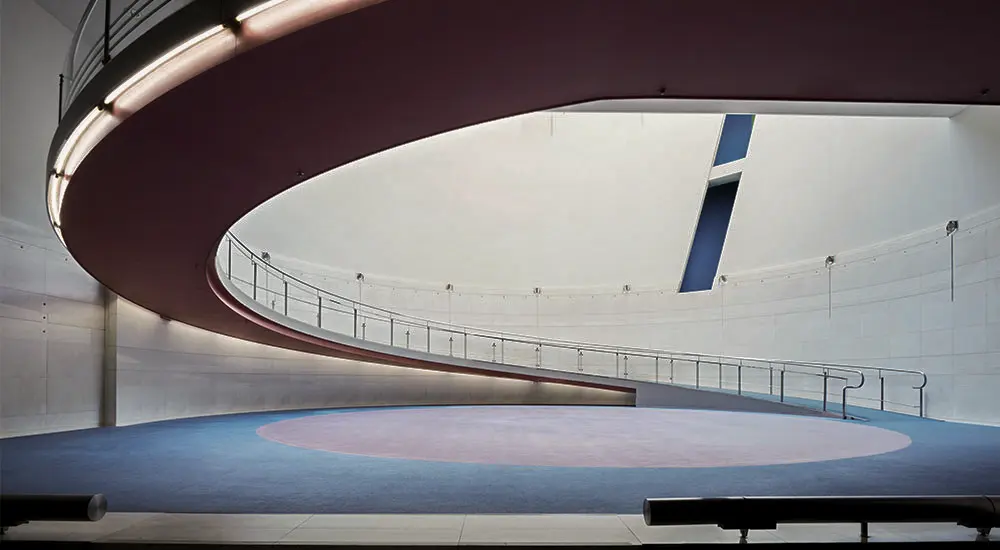

At the center of the multi-part and multi-room work “R111” (1999), a sensor-controlled sonic floor surface in the atmospherically dense cellar spaces generates internet data-fed architectures on a projection surface and monumental sound effects.
Andreas Denk, https://www.kunstforum.de/artikel/connected-cities/